As part of Pride Month, Curling Québec wishes to highlight the initiatives, journeys, and experiences that help make our sport a welcoming, inclusive, and enriching environment. Today, we invite you to discover the experience of a Quebec team that participated in the Canadian Pride Curling Championships. We met with Ryan Koroscil and Tony Weingartshofer, two members of the Town of Mount Royal Curling Club, who shared their experience with us.
For the past twenty years, representatives from member cities of the Canadian Pride Curling Association have competed annually for the title of the world’s only LGBTQ2S+ curling championship. Unlike other Canadian championships, teams represent their city rather than their province.
Twelve cities currently participate in the event: Vancouver, Calgary, Edmonton, Regina, Saskatoon, Winnipeg, Ottawa, Toronto, Montreal, Halifax, Charlottetown, and St. John’s. Each of these cities has at least one LGBTQ+ league, and most organize qualification tournaments to determine which team will represent the city at the Canadian Championship. Each of the 12 participating cities is guaranteed one berth, while the top three delegations from the previous year and the host city receive an additional berth, bringing the total field to 16 teams. Each edition is also held alongside the host city’s annual bonspiel.
The championship has evolved considerably since its inception. Several cities have joined over the years, making qualification more challenging and the competition increasingly competitive. According to Ryan, the level of play has risen significantly: “Over the past few years, the championship has become highly competitive. The level of play is strong, but the spirit of the event remains light-hearted and welcoming.” This growth has also been accompanied by a broader reflection on inclusion. In recent years, the championship moved away from the informal name “Gay Nationals” in favor of the Canadian Pride Curling Championships, a change that reflects a desire to welcome an even wider range of people who wish to be part of this community.
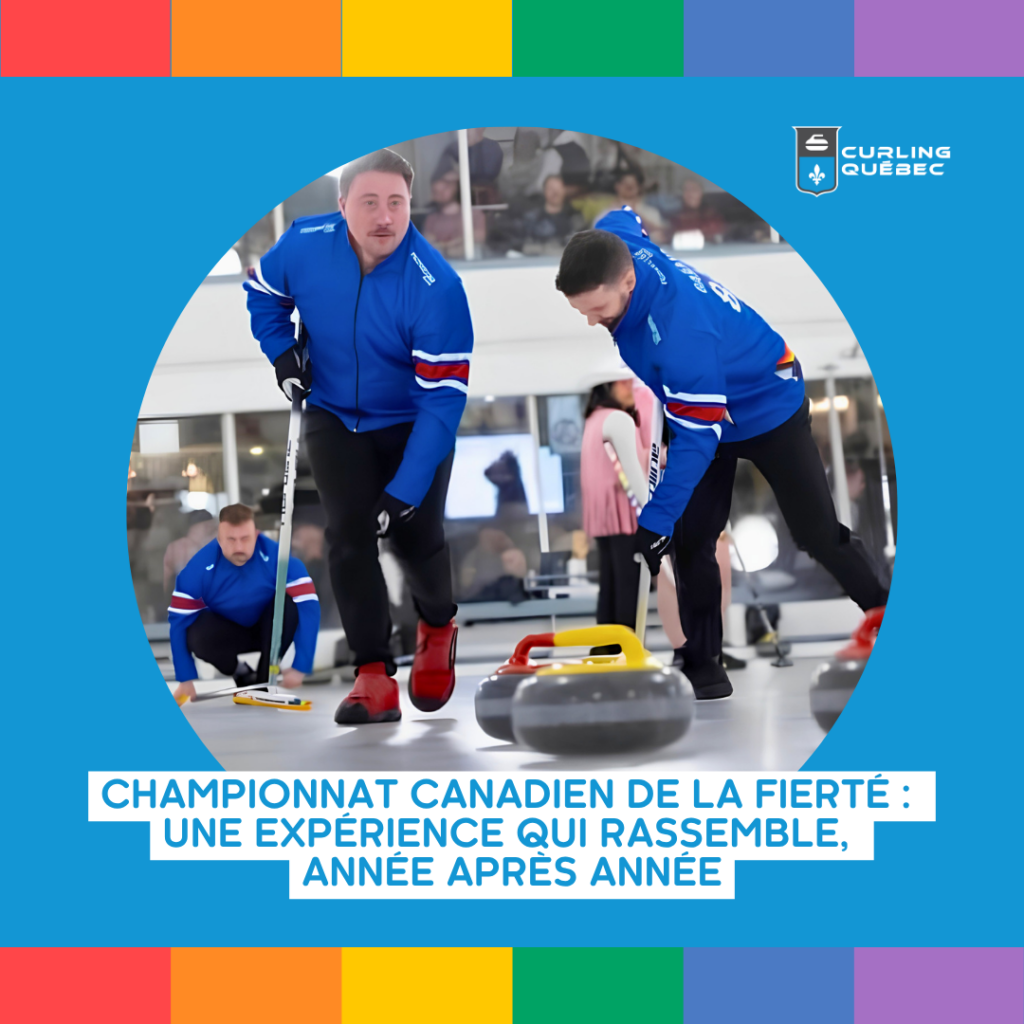
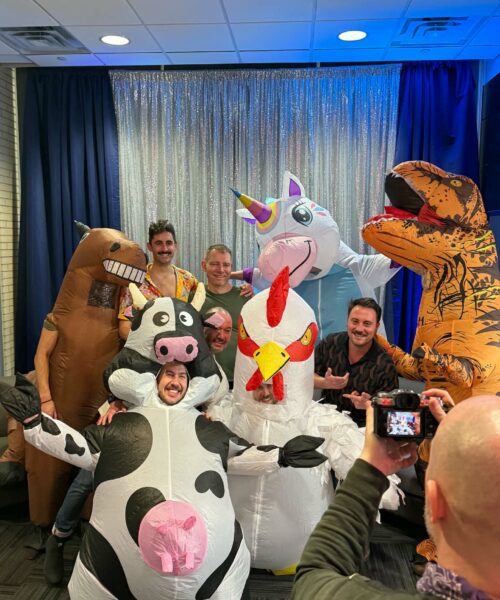
Ryan and Tony know this annual gathering well. Originally from Eastern Canada, they have accumulated numerous appearances at the championship between them. The two players previously competed together in Halifax before reforming a team in Montreal a few years ago.
However, what draws participants back year after year is not only the quality of the competition, but also the strong sense of community surrounding the event. For Tony, the championship is first and foremost an extensive network of friendships: “I’ve met an incredible number of people across Canada through this championship. When I travel to another city, I can visit these friends. And when they come to Montreal, they come see me. It’s become a large community.” Each edition is an opportunity to reconnect with people participants may only see once or twice a year. “It’s a bit like a big annual reunion,” he explains.
This social aspect is also what stands out most to Ryan. According to him, the championship allows many former competitive players to reconnect with their passion for curling while participating in an inclusive environment. “It’s really the dream of being able to combine my passion for competitive curling with such a strong social aspect.”
For four or five days, teams come together in an atmosphere where competition and camaraderie naturally coexist. In addition to the games, participants take part in various events, activities, and banquets that encourage socializing and reconnecting with members of the community. The two players also hope to see more Quebecers get involved in the years ahead, especially as Montreal is expected to host a future edition of the championship in 2028.
For both teammates, this experience also reflects the inclusive values of curling. They both consider the sport to be particularly welcoming. “I’ve never really experienced the locker-room culture that people sometimes talk about in other sports,” explains Ryan. “In curling, we’re already starting from a good place.” Tony shares the same view: “It’s a safe, inclusive, and welcoming environment. It’s a great way to meet new people and try something new.”
Ryan also points out that the very nature of curling encourages inclusion and a sense of belonging. “On a team of four players, it’s impossible to go unnoticed. You quickly learn to trust one another and build strong relationships with your teammates.”
Ultimately, when asked what they remember most from their many championship appearances, the answer is not a particular victory or result. Instead, it is the connections, friendships, and sense of belonging to a community that stretches from coast to coast. “It’s so enjoyable and so social. I would encourage anyone to come and experience it,” concludes Ryan.