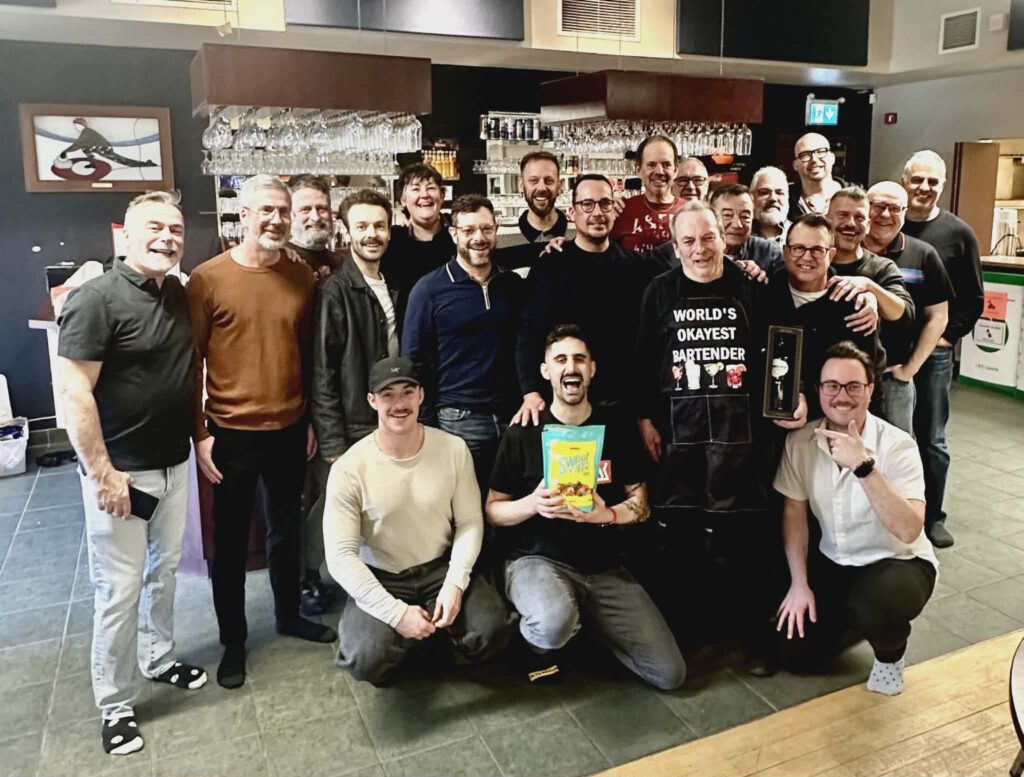
As part of Pride Month, Curling Québec wishes to highlight the initiatives, journeys, and experiences that help make our sport a welcoming, inclusive, and enriching environment. Over the past few weeks, we have shared the story of the creation of Quebec’s first LGBTQ+ curling league and followed Quebec curlers at the Canadian Pride Curling Championship. These two stories naturally led to the same question: why, more than twenty years after their creation, do leagues such as Les Fous du Roi and the Phénix continue to play such an important role within the community? To answer this question, we met with Patrick Corbière, current president of Les Fous du Roi, as well as Denis Roy and Claude Robitaille, two former presidents who have been involved since the league’s earliest days.
When reflecting on the needs the league was created to address, Denis Roy recalls: “Winter is long. There was a need for social connection. Curling was the perfect sport for that.” This desire to create connections has always been at the heart of the activities of Montreal’s LGBTQ+ curling leagues. Over the years, stories of encounters, friendships, and a sense of belonging have been built on the ice.
For Patrick Corbière, originally from Lacolle, curling also became a way to find his place within the LGBTQ+ community. After moving to Montreal in the early 2000s, he quickly realized that it was not always easy to meet others who shared both his passion for curling and his identity. Already an experienced curler, he eventually met someone who told him: “I have a cousin who curls and is gay too.” That was how he began building his network.
Originally from Abitibi, Claude Robitaille explains that moving to Montreal marked the beginning of his journey with Les Fous du Roi. “I wasn’t a curler at all, but I had just arrived in Montreal and was looking for a group activity within the community. I thought, why not?” For him, Les Fous du Roi primarily represented a gateway into the LGBTQ+ community. “It was a way for me to connect with members of the community. I had just arrived from Abitibi, and my partner and I are not really people who go to bars or clubs.” As the seasons went by, teams changed, but the relationships remained. “We’ve built a great group. Even in the summer, once the season is over, we continue to see each other, organize dinners, and take part in activities together.” Although teams change from season to season, the bonds remain.
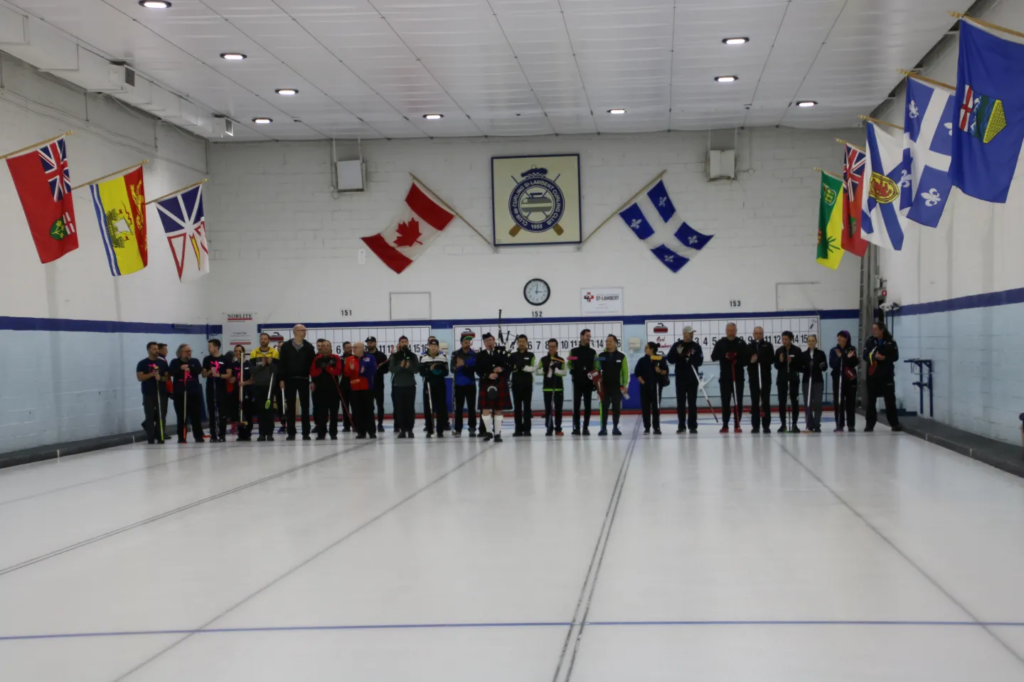

Throughout the discussion, one observation kept resurfacing: curling is important, but it is above all the human connections that explain the longevity of Les Fous du Roi. It is also what motivates so many people to return year after year. “Some people don’t come only for the sport, but because they need community,” explains Denis Roy. This social dimension is essential. Patrick Corbière recalls a new member who, after a game, was surprised to see players leaving so quickly. “He asked, ‘You’re leaving already? You’re not staying for another beer?’ For him, it felt like a new family he had just discovered in Saint-Lambert.”
Today, around thirty members gather every Sunday for a 19-week season at the Saint-Lambert Curling Club. According to Patrick Corbière, the move to the South Shore has also expanded the league’s reach. “Being on the South Shore allows us to cover a larger territory.” However, access to ice remains a challenge for curling leagues on the Island of Montreal. As Denis Roy points out, the closure of the Longue-Pointe Curling Club reduced rental opportunities, while existing clubs already have their own leagues and limited additional ice availability.
The organizers also encourage participation in tournaments outside the region, convinced of the importance of being part of a larger community. Beyond competition, these events allow members to discover other realities, build new friendships, and strengthen a network that extends far beyond Quebec’s borders. These tournaments also provide an opportunity to introduce new players to the experience. Denis Roy explains that every year he sets aside one or two weekends to participate in competitions outside the region, often with members who have never experienced such events before. Beyond the results on the ice, these trips allow participants to discover other LGBTQ+ curling communities, make new friends, and share the experience of representing their league elsewhere in the country.
This openness to other communities also resonated with Tony, whom we met in our previous article about the Canadian Pride Curling Championship. “It’s a great way to open yourself up to others. I’ve met several friends who have become lifelong friends thanks to these leagues. A friend from Toronto told me that these leagues can truly change a life if you choose to invest yourself in them. I believe that too.”
Pride Month provides important visibility for the LGBTQ+ community, but it is organizations, leagues, and volunteers that allow this community to come together throughout the year. Les Fous du Roi therefore celebrate Pride far beyond the month of June. Sunday after Sunday, season after season, the league creates an environment where members can develop a sense of belonging and build lasting relationships.
Like the Phénix, Les Fous du Roi welcome new members every season and are always eager to introduce new people to the sport through open houses and introductory activities before integrating them into the league. Interested individuals can find the relevant links below.
As we conclude this Pride Month series, one idea stands out: the stories we have shared do not exist by chance. They are made possible by volunteers, organizers, and members who, for more than twenty years, have chosen to create opportunities to meet, build connections, and make curling a place where everyone can find their place.
At Curling Québec, we believe that these initiatives help make our sport more welcoming, inclusive, and stronger. They remind us that each and every one of us has a role to play in making curling an environment where everyone feels welcome.
Because in curling, no matter who you are, you are part of the team.